A meticulously detailed, hand-carved wooden film clapperboard painted in matte black with chalky white lettering spelling “Universo Burton 2026,” resting on a distressed, ink-black desk. Around it lie scattered storyboard panels of crooked houses, spiraling hills, and striped moons, all sketched in rough graphite. The scene is set in a dimly lit gothic study, walls barely visible behind towering shelves of worn, dark leather-bound books. A single cool desk lamp casts dramatic, cinematic side lighting, creating long, exaggerated shadows that bend and twist across the surface. Shot at eye level with a shallow depth of field, the clapperboard is razor sharp while the eerie background melts into soft, moody bokeh. The atmosphere is ominous yet academic, blending cinematic realism with a dark, Burton-esque visual style.

Universo Burton: proyecto visual escolar

Explora la obra de Tim Burton desde una mirada crítica y creativa, pensada para estudiantes de secundaria.
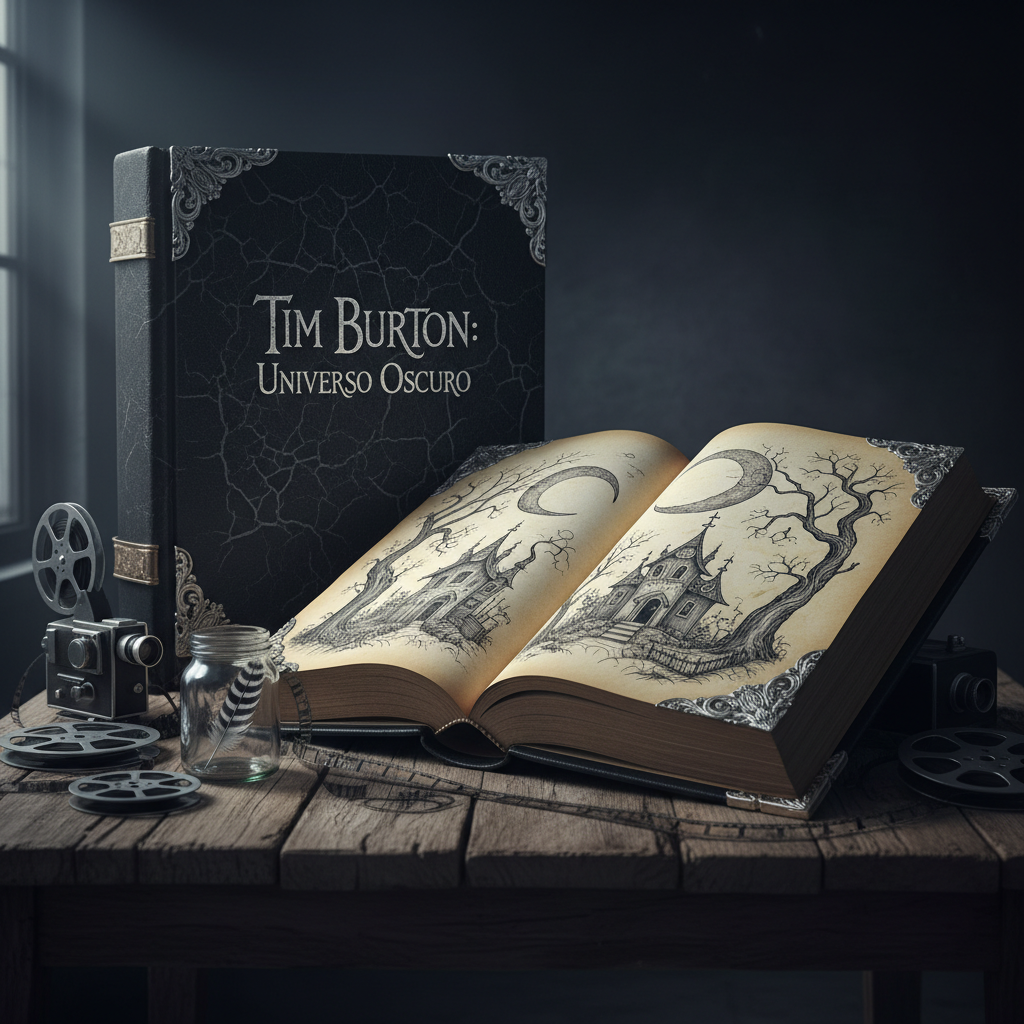
An ornate, oversized storybook titled “Tim Burton: Universo Oscuro” with a cracked black leather cover, silver embossed lettering, and curling metal corner protectors lies open on a weathered wooden table. The yellowed pages display intricate ink illustrations of lonely, crooked buildings, skeletal trees, and looming crescent moons. Surrounding the book are scattered film reels, a vintage projector, and a glass jar containing a single black-and-white striped feather. Cold, bluish light from an unseen window slants across the table, leaving the background in deep shadow. The cinematic lighting creates sharp contrasts and delicate highlights along the metallic details. Captured from a slightly elevated angle using the rule of thirds, the open book dominates the frame, while the surrounding props fade into gentle blur. The mood is darkly academic and mysterious, evoking a visual encyclopedia of Burton’s universe without showing any people.

Galería de fotogramas, bocetos y carteles que muestran la estética oscura, el humor macabro y los contrastes de luz en su cine.
A meticulously detailed, hand-carved wooden film clapperboard painted in matte black with chalky white lettering spelling “Universo Burton 2026,” resting on a distressed, ink-black desk. Around it lie scattered storyboard panels of crooked houses, spiraling hills, and striped moons, all sketched in rough graphite. The scene is set in a dimly lit gothic study, walls barely visible behind towering shelves of worn, dark leather-bound books. A single cool desk lamp casts dramatic, cinematic side lighting, creating long, exaggerated shadows that bend and twist across the surface. Shot at eye level with a shallow depth of field, the clapperboard is razor sharp while the eerie background melts into soft, moody bokeh. The atmosphere is ominous yet academic, blending cinematic realism with a dark, Burton-esque visual style.

Compara imágenes de distintas películas para identificar repeticiones visuales, símbolos recurrentes y transformaciones en el estilo de Burton a lo largo del tiempo.

Películas
A vintage reel-to-reel tape recorder in gunmetal gray with large, transparent reels sits on a scratched black desk, its cables snaking toward a heavy, matte-black microphone mounted on a spider-like stand. The microphone’s metal grille is scuffed, and an open notebook beside it reveals handwritten, slanted interview questions in deep violet ink about gothic cinema and animation. Behind, a dark acoustic foam wall rises, its geometric patterns barely visible in low light. A single, cool spotlight falls diagonally across the recorder and notebook, throwing the microphone into a stark, cinematic silhouette that stretches toward the edge of the frame. Shot at a close, three-quarter angle with shallow depth of field, the focus lingers on the interview tools, while the studio background dissolves into soft darkness. The mood is tense, intimate, and scholarly, perfect for a dark-themed interview section without any human presence.

Introducción al universo Burtoniano

Este recorrido por la filmografía de Tim Burton está pensado como una guía para explorar su imaginario oscuro y poético desde la escuela. A lo largo del sitio encontrarás fichas de algunas de sus películas más representativas, con breves sinopsis, temas clave (identidad, diferencia, familia, miedo, fantasía) y recursos visuales que te ayudarán a analizarlas. Te proponemos usarlas como punto de partida para: comparar personajes y estilos entre películas, identificar símbolos y colores recurrentes, crear tus propios storyboards “al estilo Burton”, escribir reseñas críticas y debates en clase sobre cómo el cine puede hablar de emociones difíciles. Puedes trabajar por equipos, asignando a cada grupo una película o un aspecto (música, arte, personajes) y terminar el proyecto con una exposición visual, un mural o una mini-muestra de cortos inspirados en su estética. El objetivo no es solo conocer las obras de Burton, sino aprender a mirar el cine con ojos más atentos y creativos.